Starting Scleral Lenses for Keratoconus in Bellevue: Questions About Insertion, Removal, and Follow-Up Care
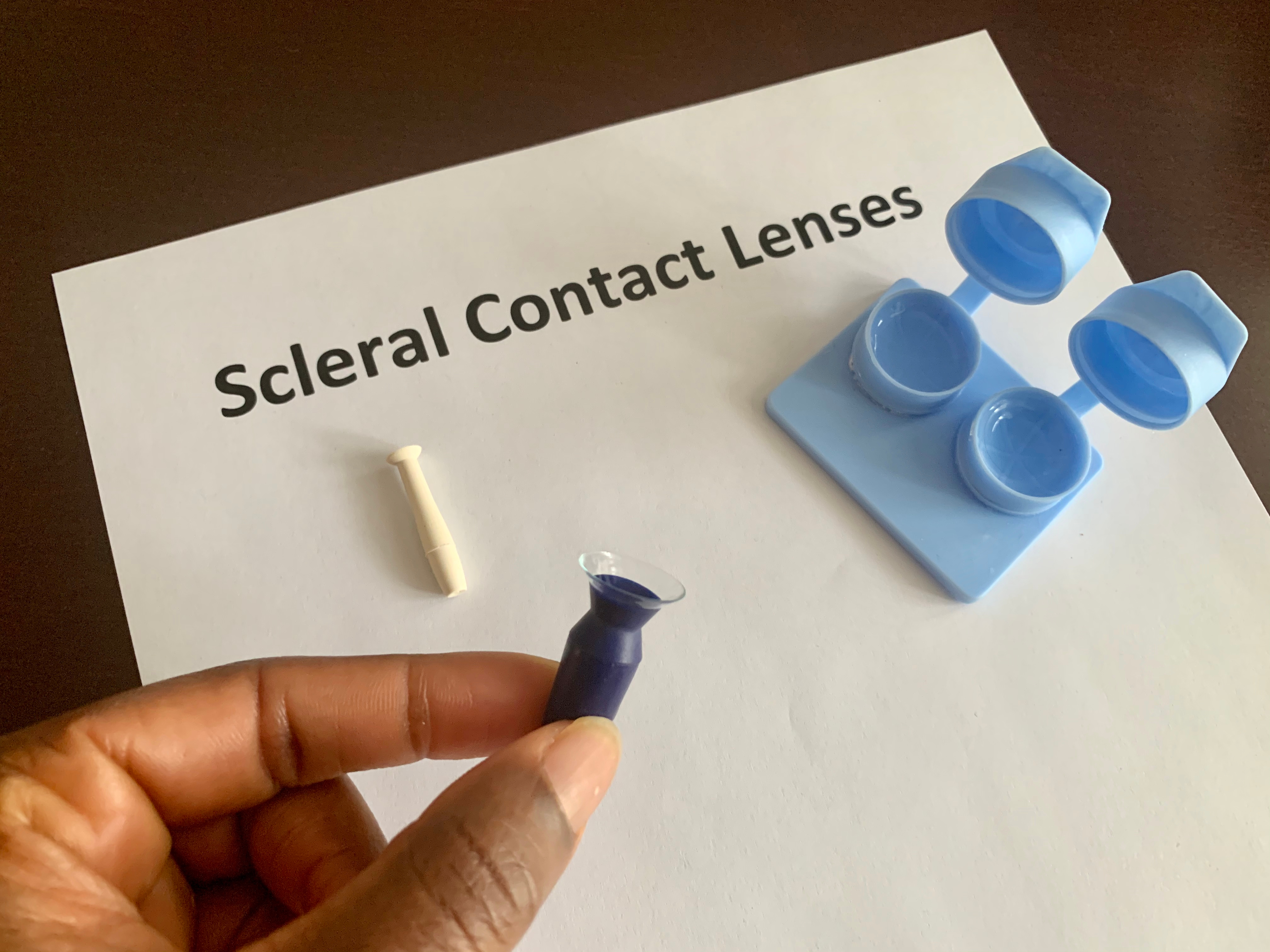
For people with keratoconus, traditional glasses and contact lenses may not provide the clear, comfortable vision they need. Scleral lenses offer another option by creating a smooth optical surface over the irregular cornea. These specialty contact lenses can improve visual clarity while maintaining a reservoir of moisture between the lens and the eye.
At Factoria Eye Clinic in Bellevue, WA, we help patients with keratoconus transition to scleral lenses through personalized fittings and ongoing care. Understanding how to insert, remove, and maintain your lenses is an important part of getting started.
What Should I Expect When Starting Scleral Lenses?
Scleral lenses are larger than traditional contact lenses and rest on the white portion of the eye (the sclera) rather than directly on the cornea. Their design helps provide stable vision for patients with irregular corneal shapes.
During your scleral lens fitting, we use advanced scleral profilometry with our Pentacam CSP (Cornea Scleral Profile) technology to evaluate the shape of both your cornea and sclera. Unlike traditional corneal topography, which measures the cornea alone, this specialized technology maps the scleral surface where the lens rests.
Many eye care clinics do not have the technology needed to measure scleral shape directly. By using Pentacam CSP, we can customize the lens based on the actual contours of your eye rather than relying solely on estimated curves. This allows us to evaluate how the lens rests on your sclera, maintain appropriate clearance over the cornea, and make adjustments to support comfort and visual clarity.
We also provide personalized guidance on handling your lenses before you begin wearing them independently.
How Do I Insert Scleral Lenses Correctly?
Learning to insert scleral lenses takes practice, especially if you're accustomed to soft contact lenses. Proper technique helps prevent trapped air bubbles, discomfort, and blurry vision.
When inserting your lenses, follow these basic steps:
- Wash and dry your hands: Always handle your lenses with clean, dry hands.
- Fill the lens: Use the recommended sterile, preservative-free saline to completely fill the lens before insertion.
- Position the lens carefully: Lean forward, hold your eyelids open, and gently place the lens onto your eye using your fingers or an insertion tool.
- Check for air bubbles: If you notice trapped bubbles, remove the lens, refill it, and try again.
At your dispensing appointment, we teach proper insertion techniques and help you become comfortable handling your scleral lenses.
How Do I Remove Scleral Lenses Safely?
Removing scleral lenses requires a different technique than removing standard contact lenses. A small removal suction cup is commonly used to gently release the lens from the eye.
Position the suction cup near the lower edge of the lens rather than the center. Gently tilt the suction cup to lift the lens edge and break the seal before removing it.
If your scleral lens resists removal, never pull forcefully. Instead, try adding a few drops of preservative-free saline or recommended lubricating drops to your eye and blinking several times. Reposition the suction cup closer to the lens edge and gently tilt it to release the seal.
Another technique involves gently pressing the lower eyelid just below the lens edge to help loosen the seal and allow a small amount of air underneath. We can demonstrate this technique during your appointment so you know how to perform it safely.
If the lens still will not come out, stop attempting removal and contact our office for assistance rather than continuing to pull.
After removal, clean and disinfect your lenses using the recommended products. Never use tap water or saliva, and avoid sleeping, showering, or swimming while wearing your lenses.
Why Are Follow-Up Appointments Important?
Follow-up care is essential when wearing scleral lenses for keratoconus. Even if your vision feels clear and comfortable, we need to monitor how the lenses fit and interact with your eyes.
During these visits, we assess lens positioning, corneal health, comfort, and visual clarity. We may recommend adjustments if your lenses cause irritation, become cloudy, or no longer provide consistent vision.
Because keratoconus can change over time, regular monitoring also helps us determine whether your contact lens prescription or fit needs updating. Scleral lenses improve vision but do not stop keratoconus progression.
When Should I Contact My Eye Doctor?
Persistent redness, discomfort, light sensitivity, or unexpected vision changes should never be ignored. Remove your lenses and contact us promptly if these symptoms develop. Severe pain or sudden vision changes require urgent evaluation.
If you're ready to explore scleral lenses for keratoconus, schedule a specialty contact lens consultation with Factoria Eye Clinic to learn more about our advanced fitting technology, lens handling, and ongoing care. Visit our office in Bellevue, WA, or call (425) 641-2020 to book your appointment today.


Interested in our
Services?
Request appointment with this form to schedule a time with our professional staff!
Address: 4317 Factoria Blvd SE Ste A
Bellevue, WA 98006
Phone: (425) 641-2020
Fax: (425) 641-7899
- Monday9:00 AM - 5:30 PM
- Tuesday9:00 AM - 5:30 PM
- Wednesday9:00 AM - 5:30 PM
- Thursday9:00 AM - 5:30 PM
- FridayClosed
- SaturdayClosed
- SundayClosed
Closed for lunch from 12:00 - 1:00 pm
Please schedule an appointment to
pick up eyewear and contact lenses
Powered by: